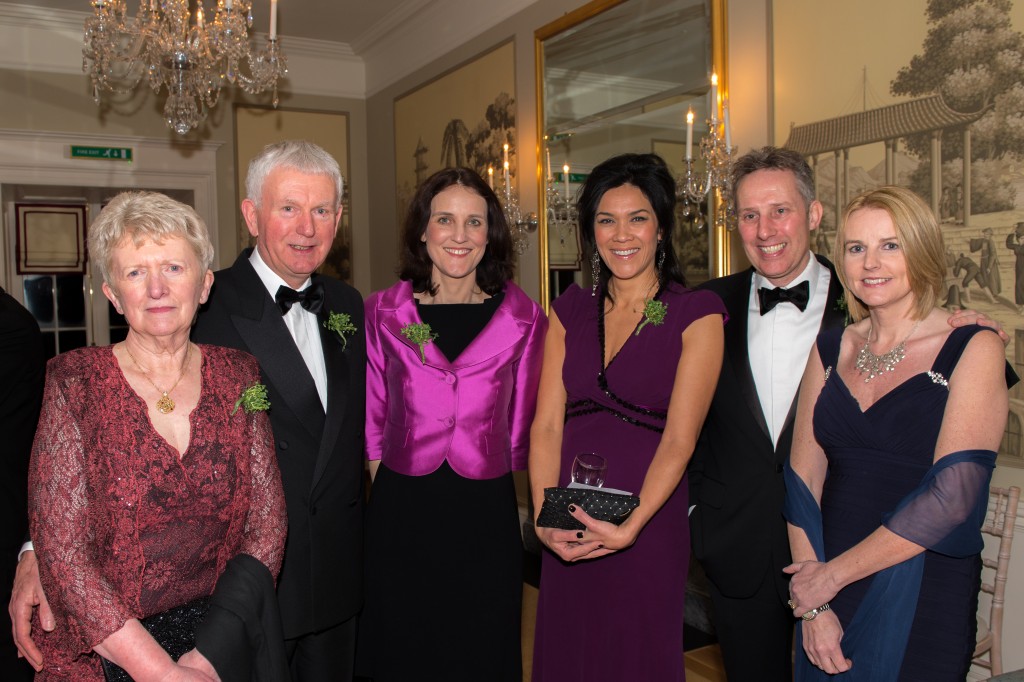
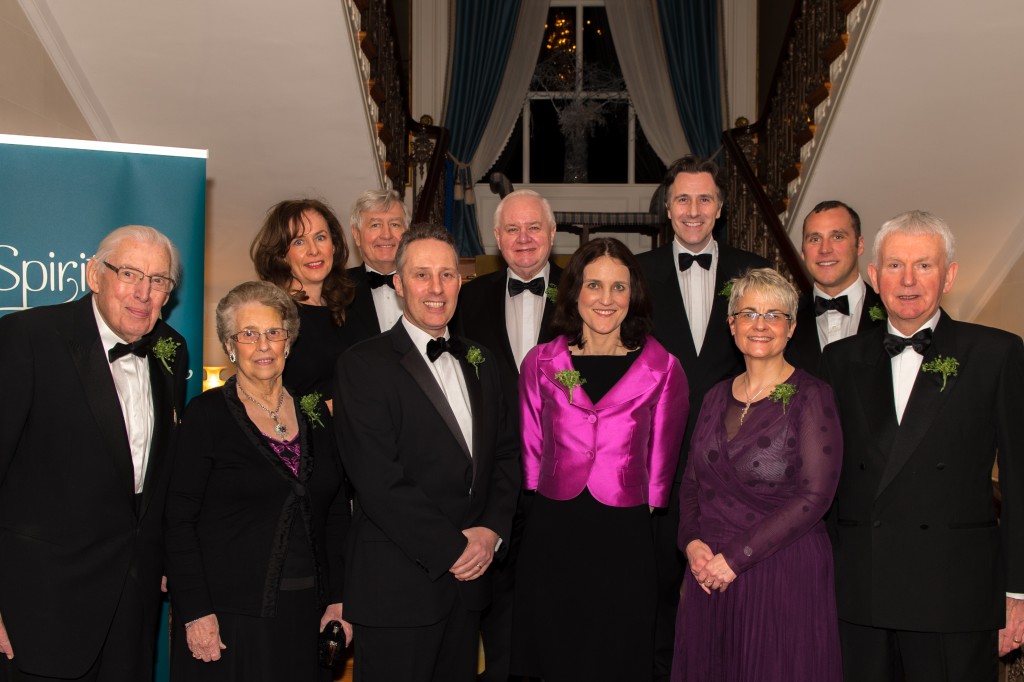
EI Sports St Patrick’s Day Karting Event

Posted in Article | Comments Off on EI Sports St Patrick’s Day Karting Event

Floreat Bangoria, Deo Laus et Gloria

In 1979 I published in Bangor my book on Bangor, where I was born and went to school. I entitled it “Bangor, Light of the World” because of the reference in the Hymn to St Patrick in the Seventh Century Bangor Antiphonary, which was itself derived from a saying by Jesus, which I heard during my visit to Lourdes as doctor to a group of disabled children from the Falls Road. I republished the book in 1987 with a foreword by my friend Tomas Cardinal O’Fiaich, which he wrote on St Patrick’s Day that year. He put the book in the Vatican Library.

“You are the salt of the earth. But if the salt has lost its savour wherewith shall it be salted? It is henceforth good for nothing but to be cast out and to be trodden underfoot. You are the Light of the World. A city set on a hill cannot be hid. Neither is a candle lit and put under a bushel, but on a candlestick,and it gives light to everyone in the house. Let your light so shine that your good works may be seen and so glorify your Father who is in heaven.”

– Jesus of Nazareth (Matthew Chapter 4, verses 13-16)

“A great Light illuminating the World has been kindled, raised on a candlestick, shining over the whole earth, a royal city well fortified and set on a hill, in which there is a great population who belong to God.”

– Hymn to St. Patrick
From the seventh century Bangor Antiphonary

I was reminded of the reference in the beautiful hymn we sang at the Service of Thanksgiving for the life of my friend since childhood, Gladys Harvey nee Kearney (1949-2013), held in Conlig Presbyterian Church on Saturday 9th March 2013.

There in the ground His body lay,

Light of the World by darkness slain;

Then bursting forth in glorious day

Up from the grave he rose again!

As it is St Patrick’s Day and we are approaching Easter I will start putting the book on my blog soon, in memory of Gladys and her husband the late Robin Harvey, also my childhood friend. It is out-of-print and very dear to buy on the internet. It was another of my books the Irish Academic Establishment wished to be burned as it mentioned the Cruthin, so I doubt if, like the Ulster People, I will publish it again. It is enough that we record that they wanted to burn it…But more of that in The Cruthin Controversy, which I will give you after this book.

Posted in Article | Comments Off on Floreat Bangoria, Deo Laus et Gloria

Saint Patrick’s Lunch

SEE BELOW & Attached – You will be welcome!


 The Irish Association

For Cultural Economic and Social Relations


President Rev Brian Kennaway


www.irish-association.org


Members, come and bring your friends to our

St. Patrick’s Eve Lunch

 On Saturday 16th March 2013

The Wellington Park Hotel

21 Malone Rd Belfast

 12.30 for 1pm


Our Guest Speaker will be

Gabrielle Moseley   

 Acting U.S. Consul General


Lunch £24.00/ €27.00


TO BOOK PLEASE USE FORM BELOW TO ARRIVE BY THURS 14TH MARCH


Note for your Diary Dublin Summer Lunch 29th June 2013


To  Dr. Donal O’Tierney Hon Treas. 41 Seaview Warrenpoint Co. Down BT34 3NJ  


Tel  +44(0)7718439719    E-mail: dotierney@talktalk.net


Posted in Article | Comments Off on Saint Patrick’s Lunch

Van Morrison: St Patrick’s Weekend Festival

New Europa Shows

Posted in Article | Comments Off on Van Morrison: St Patrick’s Weekend Festival

Saint Patrick of Lecale

St Patrick 

In 398 AD St Ninian had established the first Christian Church in what is now Scotland at Candida Casa (now Whithorn) in Galloway. Although little is known about this great Christian Saint of the Novantes, or the earliest history of his foundation, it is clear that in the fifth and sixth centuries Candida Casa was an important centre of evangelism to both Britain and the northern part of Ireland.To the Irish, however, the main credit for the introduction of Christianity to Ireland belongs to St Patrick. Yet, despite Patrick’s pre-eminent place in the history of the Irish Church, we do not know just how much of his story is historically accurate. 

Ironically, the only first-hand accounts of Patrick come from two works which he reputedly wrote himself, the Confession and the Epistle to Coroticus. Further, the reference to his arrival in the Annals cannot be taken as necessarily factual either, as it is now believed that the Annals only became contemporary in the latter part of the sixth century, and fifth century entries were therefore ‘backdated’. The question of Palladius and his mission from Rome leads to still more uncertainty, with some scholars even proposing the idea that there could have been ‘two’ Patricks. Francis Byrne suggested that “we may suspect that some of the seventh-century traditions originally referred to Palladius and have been transferred, whether deliberately or as a result of genuine confusion, to the figure of Patrick.” 

This uncertainty must be borne in mind when we come to look at his story. Patrick was first brought to Ireland as a slave from Romanised Britain and sold to a Cruthinic chieftain called Milchu, who used him to tend flocks around Mount Slemish in County Antrim. After six years of servitude he managed to escape from Ireland, first going by boat to the Continent, then two years later returning to his parents in Britain. Despite his parents being anxious that he would now remain at home, Patrick had a vision of an angel who had come from Ireland with letters, in one of which was relayed the message: “We beg you, Holy youth, to come and walk amongst us once again.” To Patrick, the letters “completely broke my heart and I could read no more and woke up.” 

Tradition tells that Patrick eventually made the journey back to Ireland, finally landing in County Down in the territory of Dichu (of the Ulaid) who became his first convert. Dichu’s barn (sabhall or Saul) near Downpatrick was the first of his churches. Among Patrick’s first converts were Bronagh, daughter of Milchu, and her son Mochaoi (Mahee). St Mochaoi was to found the great monastery of Nendrum on Mahee Island in Loch Cuan (Strangford Lough), and is associated with the saint in the legends which grew around Patrick’s name. These legends firmly place Down as the cradle of Christianity in Ireland. At Nendrum were first educated Colman, who was of the Cruthin, and Finnian, who was of the Ulaid. Colman founded in the early sixth century the famous See of Dromore in Iveagh, while Finnian, British Uinnian, following a visit to Candida Casa, founded the great school of Movilla (Newtownards) in Down. Finnian is also notable for bringing the first copy of the Scriptures to Ireland. 

Patrick himself is said to have founded Armagh around 444, and the selection of a site so close to Emain Macha would strongly suggest that the Ulster capital was still the most powerful over-kingdom in Ireland at that time. As far as Nendrum is concerned, the picture of its development is much clearer in the 7th century, for no excavated finds have been found earlier than this.But from 639 onwards the Annals record the deaths of Nendrum clergy, including bishops, abbots and a scribe..This would suggest an active, populous monastery, and an early litany says”nine times fifty monks laboured under the authority of Mochaoi of Noendruim”.   From Down the Cult of Patrick spread to Connor in Antrim and then to Armagh, which became the ecclesiastical centre of Ireland.

Posted in Article | Comments Off on Saint Patrick of Lecale

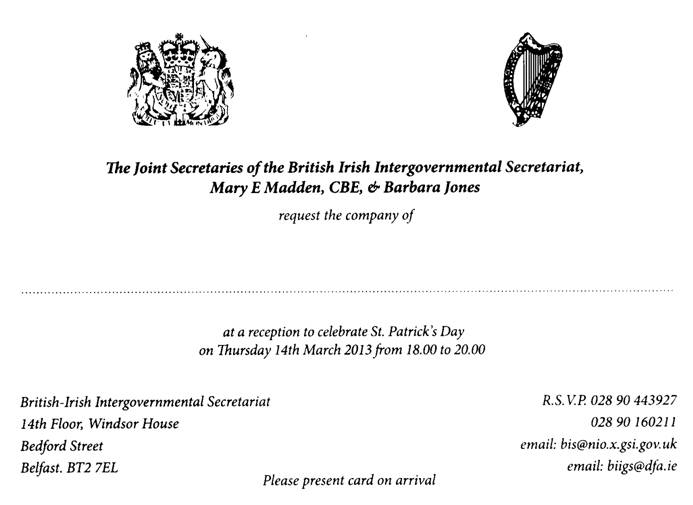
St. Patrick’s Day Reception: British Irish Intergovernmental Secretariat

To Dr Ian Adamson OBE and Mrs Helen Brooker (Pretani Associates)


Posted in Article | Comments Off on St. Patrick’s Day Reception: British Irish Intergovernmental Secretariat

St. Patrick’s Abiding Legacy: Fr. Seán McDonagh, SSC

St. Patrick’s Abiding Legacy

Fr. Seán McDonagh, SSC

I am often saddened that the binge drinking and buffoonery which often accompanies events around St. Patrick’s Day, often prevents people from understanding what St. Patrick achieved in Ireland and the abiding legacy he has left to the universal Church.   

Today, Saint Patrick’s Day is celebrated, not just in the cities of the traditional Irish diaspora in the U.S., Britain, Australia, Canada and New Zealand.  People also celebrate Patrick in Europe,  Asia and Latin America.

So, who was Saint Patrick and what is his legacy?  The first thing to say about him is that he was not Irish.  Neither his Confessio nor his Letter to the Soldiers of Coroticus tell us much about his early years except that he was born in a place called Bannavem Taburniae.  We are not sure whether it was in the Severn Valley in Wales or in northeast England, near modern-day Carlisle.  He does tell us that prior to his capture by Irish slave traders, he was not very committed to his Christian faith.   In fact, he writes in the Confesssio that he and his young friends “turned away from God and paid no heed to the priests who admonished us concerning our salvation.”

His comfortable life as a middle class person in Roman Britain fell apart when he was captured by Irish raiders and sold into slavery.   This experience of Patrick unfortunately has a modern ring about it. When I was growing up in Ireland in the 1950s, I naively thought that slavery was a thing of the past. Unfortunately, this is not true. UN statistics tell us that an estimated 1.2 million children are trafficked each year across the globe.   Eighty per cent of these young people, mainly girls, end up in the $33 billion-a-year sex industry, one of the fastest growing industries in the world.[1]  

Apart from trafficking, tens of millions of people are forced by economic or other reasons to move from their homes in search of employment elsewhere.  In China alone, it is estimated that more than 200 million migrant workers have moved from the countryside into China’s rapidly growing cities. Many are construction workers and others do menial tasks, but, because of China’s bizarre registration systems, they cannot access social services for themselves or education for their children in the places where they are now working.   With the demise of the Celtic Tiger, many young Irish men and women are forced, because of lack of jobs at home, to emigrate to Australia, Canada or wherever they can find work. Despite skype and rapid air transport, the “curse of emigration” has once again torn young people from their families and local communities and sent them wandering across the globe in search of work and a more secured life. The pain of what is involved can be seen at the airports of Ireland after the Christmas holidays, when thousands of young people bid, teary farewell to their parents and friends.

 Patrick would have no problem understanding the anxieties and humiliations which many migrants experienced in every era. We know from his Confessio that he spent six years tending pigs in a mountainous area, probably on the hill of Slemish in County Antrim. During this exile he developed a deep, intense prayer life.  He writes that “He (God) protected and comforted me as a Father would his son.”

Eventually, Patrick escaped and made his way home, where his family pleaded with him never to leave them again. Despite the humiliation and pain he experienced in Ireland, in a “vision of the night” he heard the “voice of the Irish” pleading with him to return to Ireland and share the Gospel with them.   

In preparation for his mission, Patrick  studied for the priesthood, probably at the monastery of Lérins off the coast of Provence.[2]  Before returning to Ireland, probably in the second half of the 5th century, he was ordained a bishop.

It wasn’t an easy mission.  He tells us that he “journeyed everywhere in many dangers, even to the farthest region beyond which there lived nobody.”[3]  But he rejoiced “to see the flock of the Lord in Ireland grow splendidly.” [4] Without persecution or violence, the faith took such deep roots in Ireland that “sons and daughters of kings became monks and virgins of Christ.”[5]

According to the Oxford  historian, Charles-Edwards, by the second half of the sixth century the conversion of Ireland had been achieved.  Columban who was born in 543 AD contrasted “the flourishing Christianity in Ireland with the half-heartedness of Gaul.”[6] Patrick was so successful as a missionary mainly because of the integrity of his own life and the fact that he respected the people among whom he preached the Gospel.  This form of  missionary witness is as relevant today as it was in Patrick’s time.

[1]  “1.2m children trafficked each year: report,” http://www.abc.net.au/news/2009-08-13/12m-children-trafficked-each-year-report/1390058.

[2] M T Charles-Edward,  2,000, Early Christian Ireland, Cambridge University Press,  page 224.

[3] T. W  Moody and FX Martin; (ed), The Course of Irish History,  Chapter 4, Tomás Ó Fiaich “The Beginnings of Christianity, 5th and 6th Centuries,  Dublin, 2001, page 43.

[4] ibid

[5] ibid

[6]M T Charles-Edwards, op. cit., page 240.

Posted in Article | Comments Off on St. Patrick’s Abiding Legacy: Fr. Seán McDonagh, SSC

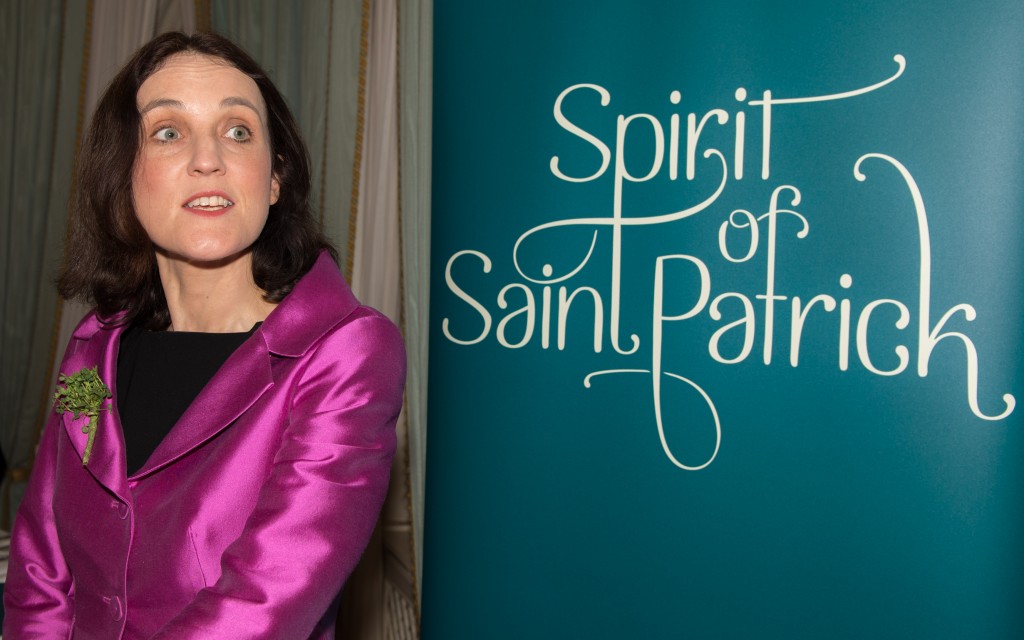
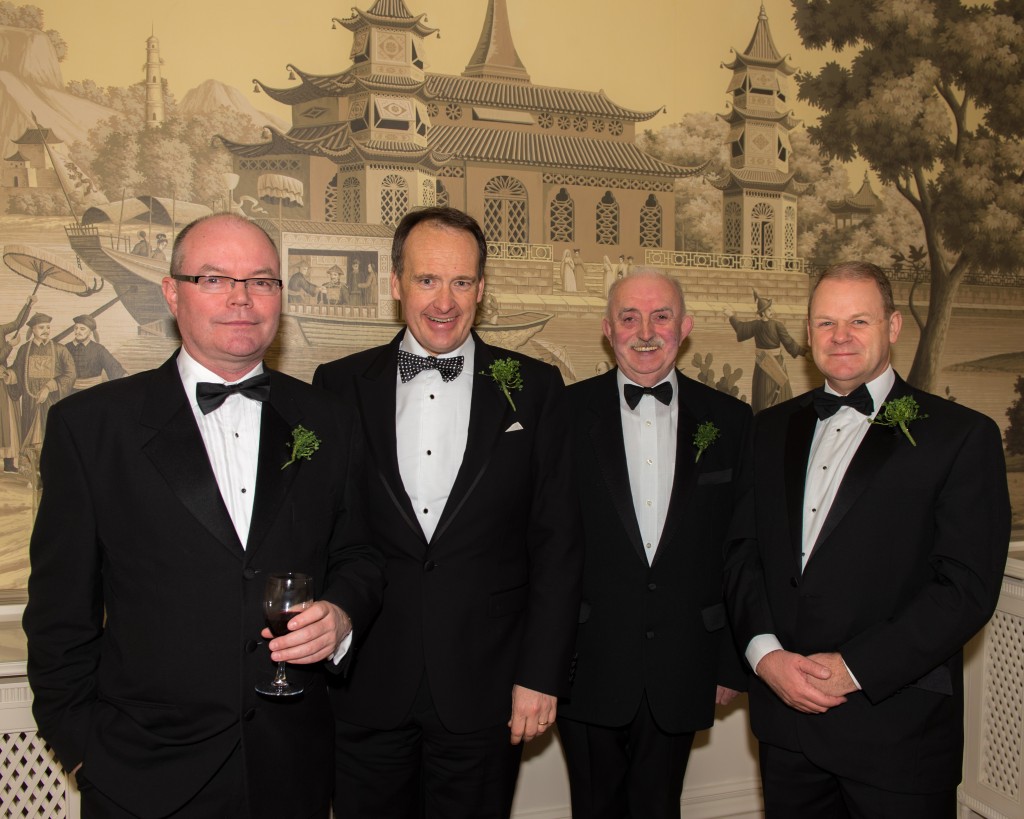
Spirit of St Patrick Dinner: Montalto House

Posted in Article | Comments Off on Spirit of St Patrick Dinner: Montalto House

Stormontium

Scientists at Belfast Metropolitan College have discovered a brand new
element.   The new element, Stormontium, (symbol=Sm), has 2 neutrons, 10
assistant neutrons, and 96 deputy neutrons giving it an atomic mass of 108.

These 108 particles are held together by forces called morons, which are
surrounded by vast quantities of lepton-like particles called  pillocks.
Since Stormontium has no electrons, it is inert. However, it can be
detected, because it impedes every reaction with which it comes into
contact.

A tiny amount of Stormontium can cause a reaction which normally takes less
than a second, to take between 4 weeks and 4 years to complete.
Stormontium has a normal half-life of 2 to 5 years.    It does not  decay,
but instead undergoes a restructuring where a portion of the assistant
neutrons and deputy neutrons exchange places.

In fact, Stormontium’s mass will actually increase over time, since each
reorganisation will cause more morons to become neutrons, forming isodopes.
This characteristic of moron promotion leads some scientists to believe that
Stormontium is formed whenever morons reach a critical concentration.
This hypothetical quantity is referred to as a critical morass.

When catalysed with money, Stormontium bonds with Administratium,
(symbol=Ad), an element that radiates as much energy as Stormontium, since
it has twenty times the number of pillocks but half as many morons.
Administrative pillocks are characterised by an aversion to using up energy.
The more pillocks there are in Administratium the less energy they use

Scientists concluded that in its present form there were very few practical
uses for Stormontium.

Posted in Article | Comments Off on Stormontium

East Belfast Mission: First Gaelic Language Week

EBM Invite

East Belfast Mission’s Seachtain na Gaeilge (Week of the Ulster Gaelic Language) Celebrations

Includes cultural evening and East Belfast’s first Irish Language Dianchúrsa


Friday, 8 March

 Cultural Evening: 8.00 pm, doors open at 7.30 pm (Free- donations welcome)

Theatre Production and Musical Performance 

Aisling Ghéar Theatre Company’s Production of Seo Robert

Written and performed by Noel McGee. Directed by Bríd Ó Gallchoir 

The show follows explores the life and work of Robert Shipboy McAdam- a remarkable cultural and historical icon. Audiences are invited to delve into the story of this fascinating historic figure.

Bi-lingual show: each Irish language section is also spoken in English.

There will be a question & answer session after the show.

Musical performance by Neil Martin and Rod McVey 

Neil Martin and Rod McVey, both accomplished musicians in their own right, have worked together for more than 25 years. Both compose, produce and perform extensively, and the two have collaborated with a number of international artists, from Van Morrison and Brian Kennedy to the Chieftains and Clannad. 

Saturday 9 March, 10.00-4.30

Dianchúrsa/Intensive Day Course (£5- includes class, tea/coffee, and lunch)

Language courses for a range of learners. 

 Registration begins at 10.00 am, and classes will begin at 10.30. Course is aimed at a wide range of abilities, with three levels offered: complete beginners, beginners, and intermediate. 


For more information about EBM’s Seachtain na Gaeilge celebrations or Irish language classes, contact: 

Linda Ervine, Irish Language Development Officer

linda.ervine@ebm.org.uk

07824348988


Posted in Article | Comments Off on East Belfast Mission: First Gaelic Language Week