Burns Supper


The best-known portrait of Burns,
by Alexander Nasmyth, 1787 (detail)

ROTARY CLUB OF BANGOR

BURNS SUPPER

Celebrating the poet’s birth on 25th January 1859

BANGOR GOLF CLUB

25 JANUARY 2013

When the first edition of Burns’ poetry, known as the Kilmarnock edition, was published in July 1788, extracts were printed in the BELFAST NEWSLETTER – the first paper in Ireland and possibly the British Isles to do so. Thereafter, his poetry frequently appeared in the paper, often before it appeared in a collected edition of his work.

Such was the popularity of his work in Ulster that the first edition of his poetry printed outside Scotland was printed in Belfast. The Edinburgh edition appeared in 1787 and was reprinted and republished by James Magee, of Bridge Street, Belfast, in the same year.  When Burns died in 1796, warm tribute was paid to him in obituaries in both the BELFAST NEWSLETTER and the NORTHERN STAR. His influence in Ulster was such that it was said that in many Ulster homes there were but two books, the Bible and Burns. Ulster people read his poetry and understood it.”

Burns holds a central position in the Ulster-Scots literary tradition and had a profound influence in the late 18th and early 19th century group of Ulster-Scots poets known as the “rhyming weavers”, who often wrote in the same style as Burns, known as the habbie stanza. Indeed some, including Samuel Thompson, the Bard of Carngranny, were in active correspondence with Burns during his lifetime.

Welcome

Chairman – President Bill Aiken welcomed guests, speakers and entertainers before reciting the Selkirk Grace:

‘Some hae meat and canna eat, And some would eat that want it, But we hae meat, and we can eat, Sae let the Lord be thankit’.

Piping in the haggis

The haggis was piped in to an upstanding audience by Past President Denis Neill. The chef carried the haggis in on a silver platter behind the piper followed by the guest speaker Dr Ian Adamson who addressed the haggis.

The address to the haggis

The guest speaker Dr Ian Adamson OBE gave a dramatic rendition of Burns’ Address to a Haggis with a knife at the ready. After apologising for ‘killing’ the haggis, he  then plunged the knife into the haggis and sliced it open during the line ‘An’ cut you up wi’ ready slight’’ meaning ‘and cut you up with skill’. The recital ended with the platter being raised above their head whilst saying the triumphant words ‘Gie her a Haggis!’ to rapturous applause.

Toast to the haggis

The guest speaker Dr Ian Adamson then invited the audience to toast the haggis and everyone, including the chef,  raised their glasses and shouted ‘The Haggis’ before enjoying a dram. He then read from The Ode to the Potatoe  by the Burns of Ulster, the Rhyming Weaver James Orr of Ballycarry and raised a toast to “The Tattie”. Following this he praised the turnip, which revolutionised farming by allowing the wintering of livestock and raised a toast to “The Neep”.  The haggis was then piped back out to be prepared for dinner.

The meal

As per menu, with starters of Haggis, Neeps and Tatties 

The immortal memory

President Bill  introduced Dr Ian Adamson who  gave his characteristic  account of Burns’ life. His literary prowess, politics, nationalistic pride in Scotland, faults and humour were explored to give the audience an insight into Burns’ life and works in a witty, yet serious way. It  concluded with an invitation to join in a heart-felt toast: ‘To the Immortal Memory of Robert Burns’.

Toast to the lassies

President Bill  introduced Past President Stephen Connolly who gave a humorous speech that gently ridiculed the (few) shortcomings of women that aimed to amuse both sides of the audience – ‘observations’ therefore were not  too cutting or damaging to existing relationships! Despite the initial mockery, the speech ended on a positive note with the men being asked to raise their glasses in a toast ‘to the lassies’.

Reply to the toast to the lassies

President Bill  introduced Jennifer Mussen who will retort with some good-natured jokes of her own, beginning with a sarcastic thanks on behalf of the women present for the previous speaker’s ‘kind’ words, before giving a lively response highlighting the foibles and weaknesses of the male race, using reference to Burns and the women in his life. 

Musical Entertainment

By this stage the audience should be sufficiently inebriated to enjoy some traditional Scottish music provided by pipers and drummers from Cleland Memorial Pipe Band complete with Rotarian Brian Hallon the “big Drum” . The audience will be encouraged to join in with song.

Vote of thanks

Past President Michael Miller will deliverED a vote of thanks to everyone who has made the evening such a roaring success, from the chef and speakers to the audience.

Auld Sang Syne

The evening ended with the singing of Burns’ famous song about parting, Auld Lang Syne. Everyone  joined hands in a large circle and sing the words together. At the line ‘And here’s a hand’, everyone crossed hands with those on either side.

Posted in Article | Comments Off on Burns Supper

The Myth of Gaelic Ireland by Colin Dykes

Dr Adamson provides a learned, and thoroughly-researched, view through the smokescreen thrown up by those who remain determined to give the Gaels (which meant “Raiders” or “Foreigners” to the native Irish) a fictitious ancient lineage, rather than being simply one of several groups of people who moved to Ireland in the centuries immediately before, and since, the birth of Christ. Movement of tens of thousands of Scottish and English settlers to Ireland during and after the Plantation of Ulster was another, and the most recent, in that series of large-scale waves of immigration. 

The Gaels themselves said that when they arrived in Ireland, the region they landed in was held by people they called the Fir Bolg (in Celtic language). In his book “Early Irish History and Mythology” first published in 1946, respected Irish Linguist and Historian T.F. O’Rahilly made an elaborate linguistic argument that the “Fir Bolg” were synonymous with the people known to Julius Caesar by the Latin name “Belgae”. He identified the historical Irish Iverni (or Erainn) and the Ulaid, tribes, from which the names Erin and Ulster were derived, with the Fir Bolg. Since the Belgae/Fir Bolg had arrived in the British Isles in Roman times, the Gaelic invasion had to be later than that, ruling out any ancient Gaelic lineage in Ireland. 

The “solution” used by Gaelic historians in the centuries after the defeat of the Ulstermen to get around this unpalatable fact was simply to make the Fir Bolg a “mythical people” thus removing that reference point in history, allowing them to concoct a fiction with Tara as the seat of an ancient line of Gaelic “High Kings of all Ireland” (of whom there is no credible historical reference), rather than a seat of the Northern Cruthin Kings of Ulster, for which there is much stronger evidence. To do this they had to dissociate the Irish term Fir Bolg (Fir = Men) from the Belgae and did so by claiming that the term Bolg was derived from the Irish word for belly, bag, or sack. The notion that people would refer to themselves as the Fir (men) of the belly/bag/sack, or even britches, as has been suggested, seems far-fetched compared to referring to themselves as the men of the Belgae/Bolg. Of course this fiction frequently ran into problems, for example with the type of spear called Gae Bolg, or Gae Bulga. To be consistent, this now had to be called a “belly spear”, which is a little odd since it appears to have been a barbed throwing spear, rather than a thrusting spear. The alternate explanation is that this was just a type of spear used by the Fir Bolg, and therefore a Belgic Spear – Gae Bolg. Amongst competing theories, the simplest one, the one that requires fewest assumptions, is usually the right one. 

In any case, the fiction took hold. The Cruthin were given a mythical Gaelic ancestry, the Fir Bolg were ignored, and Ireland became “an ancient Gaelic nation, united under Gaelic Kings based at Tara”. 

This “work-around” might have fooled people in the 8th Century but does not stand close scrutiny in 2013, or at least it should not. However, the lie continues to have traction to this day, and was even incorporated into a recent study of Irish Genetics by Professor Brian Sykes, who, in his book “Saxons, Vikings, and Celts” took it at face value and ignored any contribution to the genetics of Ireland by the Fir Bolg, dismissing them as a “mythical people”. 

The people responsible for this elaborate deceit have done a disservice to all Irish people, by denying the realities of Irish History, including denying the existence of the Fir Bolg, one of the most important peoples to arrive in Ireland. We learn history to avoid repeating the mistakes of the past, but if the very history that is taught has been falsified to support a particular point of view, then it is at best worthless, and at worst,  harmful. 

Dr Adamson, and others, including Father Tom O’Connor, in his book “Hand of History – Burden of Pseudo-History” have described eloquently, and in great detail, events in Europe that shaped Ireland in early Christian times. The Ireland they describe is not an ancient Gaelic nation, united under Gaelic Kings based at Tara. The reality is very different and no less interesting. It’s worth a brief re-cap of some of that history to justify my previous comments. 

The Cruthin/Pretani (the same name rendered in different forms of Celtic languages) were the oldest named people in the British Isles. This is beyond doubt, and attested to by so many authentic sources that politically-motivated “revisionists” cannot get around that fact. The Greeks called our islands Pretannikai Nesoi – the British Isles, after the Pretani/Cruthin people who lived there, probably based on the writings of the explorer Pytheas in 325 BC. 

By the time of Julius Caesar, Belgae had taken control of much of Southern Britain, particularly coastal regions; Julius wrote “The interior portion of Britain is inhabited by those of whom they say that it is handed down by tradition that they were born in the island itself: the maritime portion by those who had passed over from the country of the Belgae for the purpose of plunder and making war;”. 

So, in the absence of any information to the contrary, it seems reasonable to assume that the people Julius described as “born in the island itself” in 54BC were the Pretani/Cruthin referred to by Pytheas in 325 BC, and that there had clearly been significant incursions into Britain (and Ireland) by Belgae/Fir Bolg by the time of Julius’s invasion of Britain. 

Many scholars believe that Julius Caesar’s invasion was motivated at least in part by his determination to pursue a particular Belgic tribe the Romans called the Manapii (Fir Managh, or Fir Monagh in Celtic), who had refused to submit to him during his conquest of Gaul, and had fled to Britain instead. The first map of Ireland, drawn up by Ptolemy, shows Manapii in SE Ireland. It also shows the Iverni and Voluntii (believed to be synonymous with the Ulaid), that O’Rahilly identifies with the Fir Bolg. The Manapii/Fir Managh left their mark on the British Isles in the places named after them, including the Isle of Man, counties Fermanagh (Fir Managh) and Monaghan, Dunamanagh (Dun = Fort, of the Managh) and many others. Since the Fir Managh were Belgae, they were Fir Bolg, and places are generally not named after mythical peoples, not even in Ireland. Furthermore, the descendants of the families Mooney, Meaney, Meeny, McWeeney, Monaghan, Monahan, Mannion, Manning, Mongan, Mangan, Minogue, Minnock, Mannix, Manahan, Mongey, Mongavin, McMannion, McMenamin, McMonagle, Marannan and Murnane, all derived from the Fir Managh, (See The Menapia Quest, by Norman Mongan) might be surprised to learn that they are fictitious people too. 

The first map of Ireland was prepared by Claudius Ptolemy, who lived in the second century AD. His map showed two, and only two, “Regia” (Royal Site, or Capital) in Ireland. One is easily (and accurately) identified as Emain Macha, the seat of the Ulster Kings, close to present-day Armagh. The other is listed as Altera Regia (the other Regia) that some have tried to claim is Tara. Detailed mathematical analysis now places the “Other Regia” at Turoe in Galway, Connaught, NOT at Tara. 

There is no evidence of any other Regia, at Tara or otherwise. Furthermore, Tara is in Meath, South of Ulster. Yet ancient literature records that when Ulstermen referred to their enemies they didn’t refer to danger from the “South” i.e. from Tara in Meath, but rather from the Southwest, in the direction of Connaught, and the “Other Regia”. 

There are detailed historical records of the wars between the Ulster and Connaught kingdoms. Ptolemy’s Map is entirely consistent with an Ireland where the Northern Kingdom of Ulster, with its Royal site at Emain Macha, was at war with a Connaught Kingdom based around Turoe. Since no other Regia is listed at Tara, or anywhere else in Ireland, this is absolutely inconsistent with a Gaelic High Kingship of Ireland based at Tara. 

O’Connor believes that  Commius, a Belgic King who had fought the Romans in Gaul  had subsequently fled to become king of Belgic tribes in SE Britain. On hearing of the impending Roman invasion of Britain, Commius fled Southern Britain for Ireland, taking large numbers of his followers with him. Legend has it that sometime after landing in Ireland, his grandson, Dela, landed at today’s Clarinbridge on Galway Bay with 2000 warriors and captured Turoe from the Ulstermen. It seems clear that the Ulster Regia was the older of the two Capitals, but the Turoe Regia was reported to have been by far the larger. Ptolemy described it as “the most illustrious city in all Britannia and the most considerable in size, located in the western part of Ireland”. The invasion into Galway must have been of enormous proportions. 

Additional evidence of the hostilities between the invaders and the Ulstermen is evident from linear earthworks that ran from the Atlantic Ocean across the entire Island to the Irish Sea near Dundalk. The earthworks took advantage of natural obstacles, lakes etc., but many long stretches were man-made, including the “Black Pigs Dyke and “The Dorsey”. It was probably built to defend the North against Cattle-Raids from Connaught. It might be impossible to defend a fortification running the entire width of Ireland, but it would be difficult for cattle-raiders to steal your cattle and get them across across an earthen bank with a wide 20 ft deep ditch on either side. The existence of these earthworks speaks to the state of war between Ulster and Connaught. It also speaks loudly against any notion that Ireland was one Gaelic nation under High Kings at Tara. 

Who exactly the Gaels were, and where they came from, is unclear, but whoever they were, the fact is that wars between them and the Northern Kingdom of Ulster went on for centuries. The Gaels expanded outwards relentlessly, and eventually, sometime in the 6th Century AD succeeded in pushing into the West of Ulster, up into Donegal. The old Regia at Emain Macha was abandoned and the Ulstermen were forced East of the River Bann, into today’s Antrim and Down. 

No one knows what precipitated the fall of the Ulster Kingdom, but it is unlikely to be a coincidence that it happened in the middle of the 6th Century, around the time that civilizations from China, through Europe, Africa, and America were also falling.

There was a global climate catastrophe around 535 AD, recorded by Nan Shi in China: the Avars (Mongolians) were forced to move West by famine and within 20 years had conquered much of the Eastern Roman Empire, the Koguryo kingdom of Korea fell, and the Toetihuacan in Mexico disappeared. British tree-ring records confirm the catastrophy, caused by a volcanic eruption, or possibly an asteroid/comet impact. The Annals of Ulster reports that there was no bread in 536, and other reports speak of a failure of bread from 536-539. Famine may have played a role in weakening the Ulster Kingdom and allowing the invaders to break through. The Ulstermen attempted to reverse the Gaelic invasion in 637 AD, but were decisively beaten at the Battle of Moira, the largest battle ever to place within the shores of Ireland. From that time onwards, the Kingdom of Ulster was confined to the land East of the Bann and the Gaels became the dominant force in Western Ulster from late 7th Century until the Norman invasion in the 12th Century.

Somewhere in all of this there has to be some basis for the myth of Gaelic “High Kings of Tara” ruling “All of Ireland” from “Time Immemorial” – but where is it? Ptolemy’s Map shows no sign of a “regia” at Tara, only the Regia that was the capital of the Kingdom of Ulster, and “The Other Capital” of the invaders.

There is not a shred of evidence of anything other than a centuries-long war between Ulster and the Gaels of Connaught, and the eventual fall of the Ulster Kingdom, possibly precipitated by climate change. 

Coincidentally, the Irish names for Tara and Turoe are the same – Temhair. References in ancient Irish documents to names such as Cnoc Temhro, Feis Temhro and Ri Temhro (the hill, the festival and the King of Temhair respectively, with Temhro being the genitive form of Temhair) could refer to Tara OR Turoe. Perhaps there was an accidental, or intentional, confusion between old stories of Gaelic Kings at Turoe around the time of Julius Caesar, with the actual existence of Gaelic Kings at Tara after the collapse of the Kingdom of Ulster several hundred years later. 

Whatever the reason, there is no evidence of any Gaelic High Kings of Ireland, ruling from Tara in Meath until much later in history, until the 9th Century in fact.

The dark-haired, pale-skinned, blue-eyed, small boned, Cruthin who still make up the vast majority of the Irish population are the “ancient Irish” of legend. Cruthin, Fir Bolg and Gaels have all made significant contributions to Irish history, but genetically Ireland is not “Celtic”. Its gene pool was established during the centuries after the last Ice Age, when the land appears to have been settled primarily by peoples from the Iberian peninsula and, while it is generally accepted that subsequent invasions have had some impact, those effects have been small. According to Professor Stephen Oppenheimer, “Celtic languages and the people who brought them probably first arrived during the Neolithic period. Yet the regions we now regard as Celtic heartlands (Ireland, Scotland, Wales) actually had less immigration from the continent (based on genetic analysis) during this time than England. Ireland, being to the west, has changed least since the hunter-gatherer period and received fewer subsequent migrants (about 12 per cent of the population) than anywhere else”. 

Genetically Ireland is not Celtic, let alone Gaelic, there was no ancient line of Gaelic Kings in pre-Christian Ireland, and there is no evidence of Tara being the seat of “High Kings of Ireland”. Apart from that, it’s a great story. The settlement histories of the countries of the British Isles were very similar, and no subsequent invasions have been large enough to substantially change that, although, for example, the higher incidence of red hair in Scots compared to the Irish may provide a signature of higher levels of penetration into Scotland by the red-haired Belgae relative to that in Ireland. We are ALL British, geographically, if not politically, in the sense of being derived primarily from the gene stock of the initial Pretani/Cruthin settlers of the British Isles. It would be better for all concerned if that were more widely recognized.

Posted in Article | Comments Off on The Myth of Gaelic Ireland by Colin Dykes

IBIS Book Launch

Book Launch

No Alibis Bookstore, Belfast

Thursday 24th January, 5.30pm


‘Memories, Politics & Identity – Haunted by History’

By Cillian McGrattan


‘Everyday Life after the Irish Conflict – The Impact of Devolution & Cross Border Cooperation’

Edited by Cillian McGrattan and Elizabeth Meehan


As Northern Ireland enters a decade of commemorations this book will be a major resource for all those interested in the politics and history of memory. Cillian McGrattan makes a frontal assault on the shibboleths of ‘truth recovery’ in Northern Ireland charging its political and academic proponents with reproducing and legitimising the self-justifying narratives of loyalist and republican ex-paramilitaries. Using a wide range of sources from party archives and interviews to drama and film he argues that the peace process has been based on entrenching ethnic narratives which deny the sordid and murderous history visited upon the thousands of victims by the IRA and its loyalist counterparts.
 
Henry Patterson
Professor of Politics, University of Ulster, UK.


Institute for British-Irish Studies

School of Politics and International Relations

G314, Newman Building

University College Dublin

Belfield, Dublin 4

Ireland

Tel: +353 (0)1 716 8670

Fax: +353 (0)1 716 1171

www.ucd.ie/ibis

 www.ucd.ie/ibis

david@noalibis.com 

NO ALIBIS BOOKSTORE

83 BOTANIC AVENUE, BELFAST BT7 1JL

028-90-319601

Posted in Article | Comments Off on IBIS Book Launch

The Place-Names of Northern Ireland

 The Committee for Finance and Personnel of the Northern Ireland Assembly

in association with Queen’s University Belfast

invited Helen Brooker and Dr Ian Adamson OBE

to the official launch of

The Place-Names of Northern Ireland

www.placenamesni.org

an online database produced by

The Northern Ireland Place-Names Project, Queen’s University Belfast

on Monday 21 January 2013 at 2.00 pm in the Long Gallery, Parliament Buildings 

AGENDA 

1.45pm: Guests arrive

Light refreshments available

2.00pm: Introduction and Welcome

Daithí McKay MLA, Chairperson

Committee for Finance and Personnel

QUB Response

James McElnay, Pro-Vice-Chancellor 

2.10pm: Shared Spaces and Names of Places: some examples from Co Down

Mícheál Ó Mainnín, QUB 

2.30pm Concluding remarks

Minister of Finance and Personnel Sammy Wilson MLA 

2.30pm – Opportunity for individual demonstrations

3.00pm Jonathan Sloan & Colleagues,Land and Property Services


Posted in Article | Comments Off on The Place-Names of Northern Ireland

Letter from Máirtín Ó Muilleoir

Cllr. Máirtín Ó Muilleoir

Member’s Room

City Hall

Belfast

BT1 5GS

An Comh Máirtín Ó Muilleoir

Seomra na mBall

Halla na Cathrach

Béal Feirste

BT1 5GS

An tAire Carál Ní Chuilín

An Roinn Cultúir, Ealaíon agus Fóillíochta

1‐7 Bedford Street

Béal Feirste

17 Eanáir 2013

‘Aire, a chara,

Bliain úr faoi mhaise duit.

On Friday 4 January, I had my first opportunity to visit the Somme Heritage Centre at

the invitation of founder Dr Ian Adamson and Director Carol Walker.

I was immensely impressed by the passion of the staff at the Centre and commend

their efforts to tell this important story while promoting community reconciliation.

I confess myself to be at the very start of a journey in which I hope to learn more

about the Somme but believe there was no better place to start than at this

important Heritage Centre. It is clear to me that the Somme is of particular

significance to my unionist neighbours and, therefore, it is crucial to me that it is

given its rightful place in our efforts to commemorate our shared history.

I do hope you will do all in your power to ensure the continued success of the centre.

I welcome your efforts to increase DCAL support to the Centre and hope your

officers can work closely with the Centre to ensure it can raise the matching funded

needed to release DCAl funds.

Le meas,

Cllr. Máirtín Ó Muilleoir

Posted in Article | Comments Off on Letter from Máirtín Ó Muilleoir

Centenary of Second Home Rule Bill


The Minister of State forNorthern Ireland, Mike Penning MP

and

The Irish Minister for Arts, Heritage & the Gaeltacht, Jimmy Deenihan 

request the company of 

Dr Ian Adamson OBE

……………………………………………………………………………………………………. 

at a joint event to mark the Centenary of the passing of the 2nd reading of

the Home Rule Bill through the House of Commons

on Wednesday 16 January 2013 at 1300-1400 hrs 

IPU Room                                                                                                                                                                                                                                    Westminster Hall                                                                                                                 House of Commons                                                                                              Westminster                                                                    


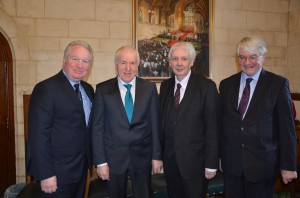
NIO Min Mike Penning MP

Min Arts, Heritage & Gaeltacht, Jimmy Deenihan TD,

Lord Paul Bew

Dr Martin Mansergh, Vice Chair, Advisory group on Commemorations, 

Kingley Donaldson, myself and Andrew McKinley

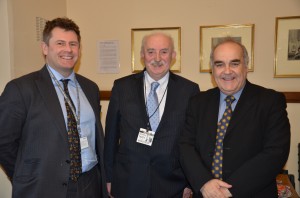
At the Irish embassy our friends were: 

Min Arts, Heritage & Gaeltacht, Jimmy Deenihan TD,

Minister Andrew Murrison MD MP

and reps of Commonwealth War Graves Commission, Royal British Legion, Imperial War Museum and The National Archives.


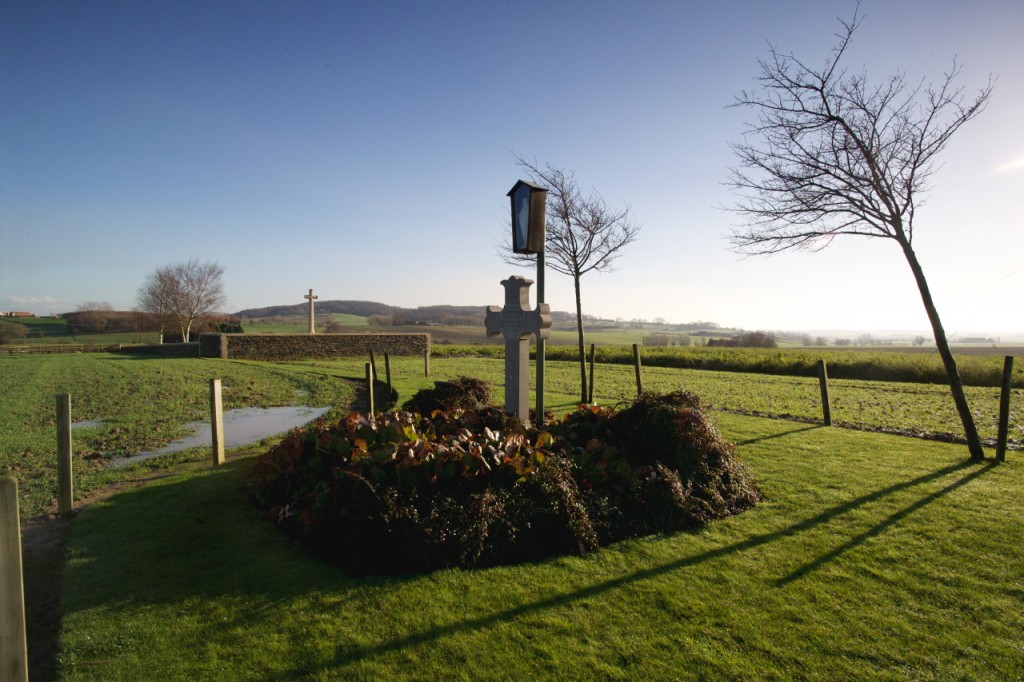
                                               Loker Hospice CWGC & grave of Major W H K Redmond.


Posted in Article | Comments Off on Centenary of Second Home Rule Bill

Columbanus – Patron Saint of Europe by Sean McDonagh SSC

The Irish Times – Tuesday, January 15, 2013 Columban, the patron saint of a united Europe by Seán McDonagh

Rite & Reason: The Irish presidency of the European Union provides an opportunity for us to reflect on the achievements of the Irish in Europe from the sixth to the eighth centuries. St Columban is arguably the best-known Irish person to have visited the European continent then.

Born on the Carlow/ Wexford border about AD543, he studied under Sinell of Cleenish, whose monastery was on an island of the river Erne, in modern Co Fermanagh. Later he joined the monastery at Bangor under the abbot Comgall and was ordained a priest. At age 51, with a number of companions, he set sail for Europe to become a pilgrim for Christ.

In Saint Columbanus: Pilgrim for Christ, Fr Aidan Larkin gives a biographical sketch of the saint: “The child would grow to manhood and become first a monk, then a priest, a distinguished scripture teacher, a master of Latin prose style and rhetoric, a competent versifier, an abbot, a founder of monasteries and monastic lawgiver, notably in Annegray, Luxeuil and Fontaines, in Burgundy, France, from where he would be expelled, and then in Bregenz, Austria, and finally in Bobbio, northern Italy, where he would die in 615.

A European saint

“The monasteries that he founded would multiply themselves. Figures vary, but around 60 is a reasonable claim for the number of monastic communities living under the Columban Rule in the following generation, in France; and, out of roughly 100 French diocesan sees, at least 12 would be occupied by his disciples.” In June 2008, in a reflection on the life of St Columban, Pope Benedict XVI said there was good reason to call Columban a European saint. The pope drew attention to the fact that the expression “totius Europae – of all Europe” first appeared in a letter which Columban wrote to Pope Gregory the Great in AD600. Pope Benedict also points out that Columban’s last monastery at Bobbio became a “cultural centre on a par with the famous (Benedictine) monastery of Monte Cassino”.

Columban never forgot his Irish identity. In fact, he is the first Irish person to articulate a sense of what it means to be Irish. In the letter he wrote to Pope Boniface in AD613, he wrote of “…we Irish”. The Irish were not held in high esteem in continental Europe during the Roman Empire and even after the collapse of that empire.

Columban and the monks who followed him to Europe in the sixth and seventh centuries changed that perception radically. The fact that, within a generation after his death Jonas, a monk at Bobbio, wrote the Life of Columbanus is a testimony to the importance of Columban’s legacy in Europe.

Shaping identity

The UCC historian Damian Bracken has commented that, “this is another
first: Columbanus is the first Irishman to be the subject of a biography”.

Columban and the other Irish monks who laboured in Europe between the sixth and eighth centuries helped to shape the European identity.
According to Bracken, “shrines, towns and landmarks across Europe bear Columbanus’s name and testify to the widespread diffusion of devotion to the saint”. In the middle of the ninth century a biographer of St Gall, a colleague of Columban, acknowledges the debt of his people to Ireland “whence the splendour of such light came to us”.

In July 1950 a congress was organised in Luxeuil in eastern France to celebrate the 1,400th anniversary of the birth of St Columban. It was the brainchild of Robert Schuman, one of the founders of the European Union, who was at the time foreign minister of France and a tireless promoter of understanding and co-operation among European countries.

In his speech then he said that, “St Columban, this illustrious Irishman who left his own country for voluntary exile, willed and achieved a spiritual union between the principal European countries of his time. He is the patron saint of all those who now seek to build a united Europe.”

Taoiseach of the day, John A Costello, told the gathering that: “All statesmen of today might well turn their thoughts to St Columban and his teaching. History records that it was by men like him that civilisation was saved in the 6th century.”

A Columban priest, Fr SEÁN McDONAGH is based at Dalgan Park, Navan, Co Meath. Blog: earthcaremission.wordpress.com

Sean McDonagh, SSC,
St. Columban’s, Dalgan Park, Navan, Co. Meath.
tel 00353872367612
visit his blog at http://earthcaremission.wordpress.com
=============================================================

Posted in Article | Comments Off on Columbanus – Patron Saint of Europe by Sean McDonagh SSC

Letter from Jeffrey Donaldson

To: Dr Ian Adamson OBE 

Dear Ian, 

Following my recent appointment by the Prime Minister to the UK Advisory Board for the Centenary Commemorations of the First World War, I have been asked to establish and chair a committee in Northern Ireland to consider our own plans to mark this important period in our shared history. 

As you will know, we face a decade of significant centenaries on the island of Ireland and I feel it is important that these should not become divisive.  The global events that took place during 1914 – 1918 involved people from across the island and the political divide and had a profound effect on the history of Ireland in the 20th century.  The centennial commemorations of the war provide an opportunity to enhance our shared understanding of this history and to promote reconciliation. 

It is for this reason that I believe the key themes for the commemoration of the First World War in Northern Ireland should be remembrance and reconciliation.  The Prime Minister has identified a number of significant dates for UK commemorative activity and Northern Ireland will play its part in these.  They include 4 August 2014 – beginning of the war; 1 July 2016 – commencement of the Battle of the Somme and 11 November 2018 – the Armistice.  

In addition, I hope that the local committee will identify other dates that are of particular significance to Northern Ireland and the island of Ireland, including the centenary of the Battle of Messines on the 7 June 2017.  Initial discussions have already taken place with the Irish Government about this. 

Being aware of your keen interest in the ‘Great War’ and the people from this island who served during that period, I have the honour of formally inviting you to become a member of the Advisory Committee in Northern Ireland.  This invitation is made to you in your personal capacity and I would wish to stress that the committee will be apolitical in its approach to the centenary. 

I look forward to working with the committee towards our ambition of creating a commemoration worthy of this historic centenary and hope that you will feel able to serve as a member.  To facilitate the establishment of the committee, I would be grateful if you could respond to me by email or letter to the address below at your earliest convenience. 

With kind regards. 

Yours sincerely,

Rt Hon Jeffrey Donaldson MP

29 Castle Street

LISBURN

BT27 4DH


Posted in Article | Comments Off on Letter from Jeffrey Donaldson

Corporate Lobbying is all persuasive: Sean McDonagh SCC

Last week I wrote about how corporations such as Microsoft, Google, eBay, Starbuck and Amazon have designed their tax operations in Britain so that they pay little tax in the UK. Most reasonable people believe that companies should pay tax in the jurisdiction in which they make their profits.  Even the British Prime Minister,  David Cameron admitted in Parliament on October 24th 2012 that he was not happy with the way transnational corporation avoid paying taxes.[1] During the ensuing debate it was pointed out that Amazon, which is based in Luxembourg and owns Kindle, has a big advantage over UK-based book stores such as Waterstones which has to pay VAT at 20pc. The company has also been criticised for avoiding corporation tax, despite being Britain’s biggest online retailer with sales of £3.2bn last year.[2]

In the December 1997 budget, the Irish Finance Minister, at the time, Charlie McCreevy reduced from 32 percent to 12. percent rate for trading income. Naturally, corporations found this carrot very desirable and many of them registered for tax purposes in Ireland.  By setting up its European headquarters in Ireland, for example, Apple has  avoided paying hundreds of millions of dollars in taxes both in the United States and Europe. Google has avoided paying $2 billion on corporation tax in 2011 in Britain by using a company based at the office of a Dublin solicitor  and a Dutch company.[3]

With fresh accusations that many Transnational Companies are using Ireland to avoid paying taxes in Britain, Ireland’s corporate tax regime will come under renewed scrutiny. The French government, under the leadership of President Nicolas Sarkozy, tried to force Ireland to raise its corporate tax rate so that there would be level playing field in corporate tax rates across Europe.  But studies undertaken by the firm KPMG point out that during the past five years France has effectively reduced its corporate tax rate by offering very generous tax breaks and incentives for such things are research and development and even hiring older workers. The Irish finance minister, Michael Noonan, claimed that the effective corporation tax rate in France is often as low as 8.1 percent.

The fact that Ireland is very generous to corporations, even in a period of extreme financial hardship, does not mean that corporations do not pressurize the Irish government to secure special deals. This is particularly true in the pharmaceutical sector which employs about 25,000 people directly and a similar number indirectly. Despite this massive presence of pharmaceutical companies, the price of medicines in Ireland is one of the highest in the world, 45 percent higher than in Sweden.[4]

In this period of economic hardship for many Irish people, it would make sense if the Health Service Executive (HSE) could buy drugs at a much cheaper price, than it does at the moment. But the drug companies have lobbied the Taoiseach (Prime Minister) to ensure that this will not happen. In a letter to the Taoiseach dated February 23rd 2012, Miles D White, chairman and chief executive of Abbott Laboratories in Illinois directly linked continued inward investment into Ireland with the inflated price which the Irish State pays to pharmaceutical companies.  It is clear that Mr. White was also speaking for other drug companies when he wrote, “in common with other pharmaceutical multinational organizations, we find it difficult to reconcile a policy of pursuing inward manufacturing investment with an attempt to drive medicine prices to among the lowest in Europe.”[5]

Given that Ireland is a small country, White’s concerns are not just about the exorbitant profits which his and other pharmaceutical companies make in Ireland. His real concern is that a drop in medicine prices in Ireland could have a knock-on effect on the international market. His letter states, “International price-referencing results in pricing in Ireland (could) have a knock-on effect on pricing of medicines in 11 other European countries and 37 countries world-wide.”  Then he threatened the Taoiseach, “driving down the price of medicines across such a large number of export markets for the Irish-based pharmaceutical industry could directly jeopardize jobs in Ireland as it will create substantial pressure to cut manufacturing jobs.”[6] There has been no change in the exorbitant price which the Irish government pays to drug companies.

In the light of such irresponsibility by corporations, Pope Benedict’s Christmas 2012 is welcome.  He called for “the creation of ethical structures for currency, financial and commercial markets.”


[1] Louise Armitstead, “Foreign firms face tax crackdown in UK and Europe,” The Telegraph, October 24th 2012.  http://www.telegraph.co.uk/finance/newsbysector/banksandfinance/9631702/Foreign-firms-face-tax-crackdown-in-UK-and-Europe.html

[2] ibid

[3] Colm Keena, “Bitter pill that comes with having large drugs sector,” The Irish Times, December 15th 2012, page 13.

[4] Ibid

[5] ibid

[6]ibid

Posted in Article | Comments Off on Corporate Lobbying is all persuasive: Sean McDonagh SCC

The Power of Modern Corporations: Sean McDonagh SSC

Every now and then we get a glimpse of the power of the modern corporation and how often the behaviour of these giant economic enterprises appears to be morally questionable. Transnational Corporations (TNCs) are very powerful economic entities in the modern world.  One way to get a picture of the pervasive presence of corporations is to realise that in the year 2000, the sales of the world’s ten largest TNCs exceeded that of the combined GDP of the world’s 100 ‘least developed’ (economically) countries. TNCs are very demanding: They expect that the countries in which they operate will have excellent educational and health systems. They also  expect an efficient transport system which will allow them  to move their goods and services quickly around the world.  Providing these services and building up a viable infrastructure costs money.  It seems that many corporations are unwilling to pay their fair share of taxes to the British government to maintain these services.

For example, in October 2012, it emerged that powerful wealthy corporations such as Microsoft, Amazon, Starbucks, Google and Facebook were either not paying taxes in Britain or were only paying a pittance.  Starbucks arrived in Britain in 1998. Since then it has only paid £8.6 million in taxes to the British government.

According to Lawrence Latif of The Inquirer, Microsoft has not been paying taxes to the British government on its £1.7 billion revenues in the United Kingdom.  Microsoft in Britain seems to have a complex and convoluted tax arrangement which involves declaring its profits in Ireland and Luxemburg.  The company’s  operation in the United Kingdom comes under the umbrella of Microsoft Ireland Ltd. which is registered in Ireland where corporation tax is a meagre 12.5 percent. Naturally, the British government and other European governments are not happy that the corporation tax policy of countries such as Ireland is facilitating the non-payment of tax by giant, wealthy corporations.[1] 

In response to the negative publicity, Microsoft issued a statement in which it claimed to have abided by all laws. The firm said, “Microsoft pays all due taxes, as required by law, worldwide. Microsoft subsidiaries are fully subject to tax in the jurisdictions in which we operate. We are regularly audited by major tax jurisdictions, which ensure the company is complying with all rules and regulations.”

The Inquirer also asked Microsoft to confirm whether it had paid any UK corporation tax, a question the firm did not answer. However, the firm published a statement in which said that it abides by all tax laws.

During the Prime Minister’s question-time at the end of  October 2012. Margaret Hodge, who chairs the public accounts committee at Westminster asked David Cameron why he had criticised commedian Jimmy Carr for avoiding £3.3m of tax – when large companies were avoiding much larger sums. “Apple, Google, Facebook, eBay and Starbucks have avoided nearly £900m. Will the prime minister now take this opportunity to condemn their behaviour as morally wrong?” she asked.

Mr Cameron replied that he was “not happy with the current situation” and he wanted governments to tackle the problem of companies not paying the appropriate amount of tax.[2]  The Revenue estimates that tax avoidance costs the UK £5bn each year.

At a public accounts committee meeting on November 12, 2012, MPs grilled executives from Amazon, Google and Starbucks about their financial practices. They accused them of diverting hundreds of millions of pounds of profits which were made in Britain to secretive tax havens. An executive of Starbucks which employs more than 7,000 workers at 800 cafes across Britain was told that his assertion that Starbucks was not making a profit in Britain was simply unbelievable. Google’s bosses agreed that they operated in Ireland because of the low corporation tax there.[3] Andrew Cecil, Amazon’s director of public policy, was accused of being “totally evasive” after failing to explain who owned the company, and was unable to give details of the income made by his company in Britain.

Hodge told the executives that UK taxpayers are increasingly frustrated by the use of tax havens and creative accounting by large firms trading in Britain. “People want to know why companies which benefit from an infrastructure paid for by them and are paying people low wages who receive taxpayer-funded tax credits from the exchequer are not paying their fair share,” [4]


[1] By Lawrence Latif, “Microsoft is accused of not paying UK corporation tax,” The Inquirer, December 10th 2012.  http://www.telegraph.co.uk/finance/newsbysector/banksandfinance/9631702/Foreign-firms-face-tax-crackdown-in-UK-and-Europe.html

[2] Jim Pickard and Vanessa Houlder, “Google and Starbucks face tax questions,” The Financial Times, October 30th 2012. http://www.ft.com/cms/s/0/493d4d24-2298-11e2-8edf-00144feabdc0.html#axzz2FDRfd9Nd

[3] Rajeev Syal, “Amazon, Google and Starbucks accused of diverting UK profits,” The Guardian, November 12th 2012. http://www.guardian.co.uk/business/2012/nov/12/amazon-google-starbucks-diverting-uk-profits/print

[4]ibid

 
Posted in Article | Comments Off on The Power of Modern Corporations: Sean McDonagh SSC